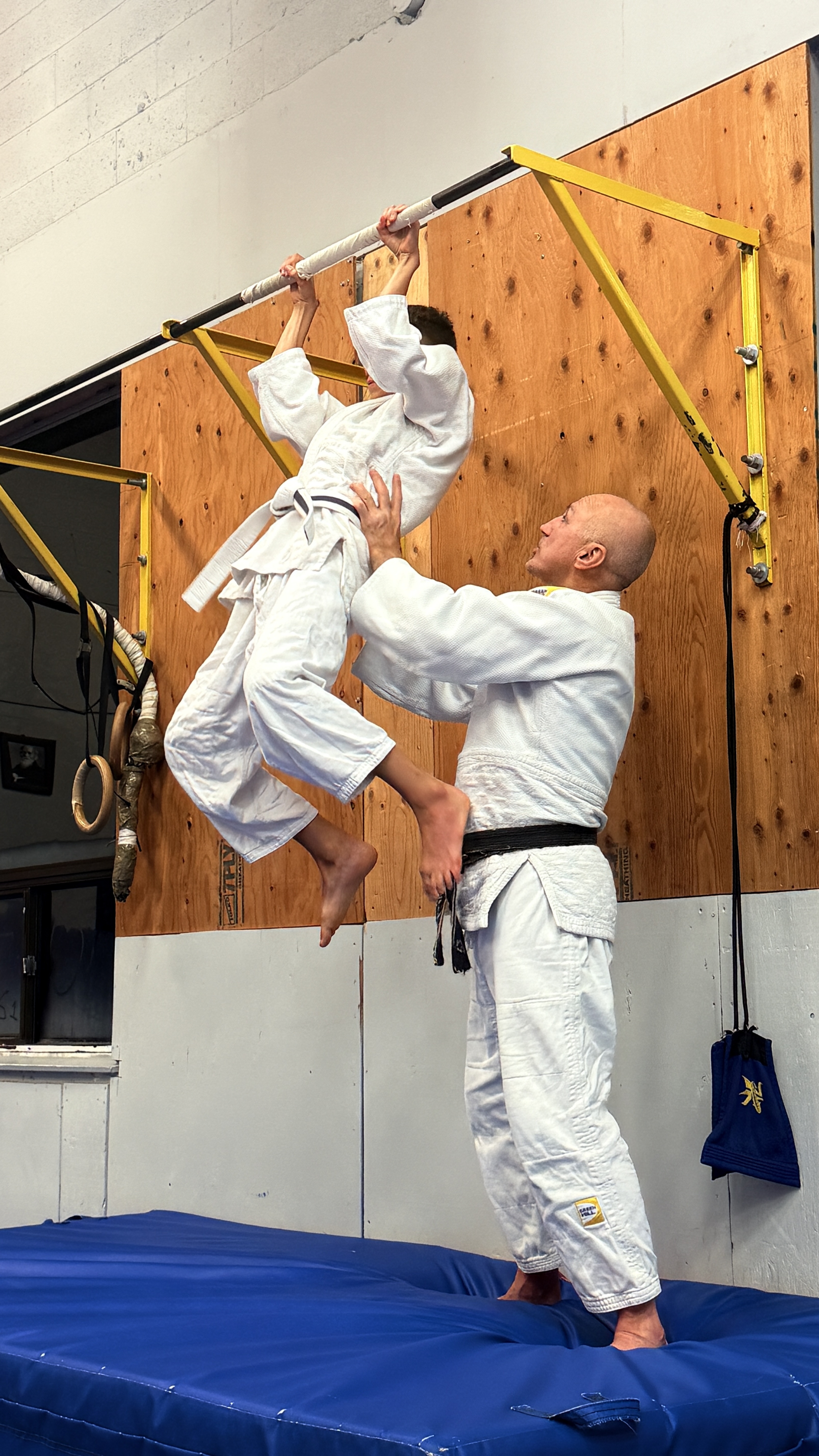
03 — YOUTH PROGRAM (AGES 9–12)

YOUTH PROGRAM

Progressive Judo and Sambo training focused on technical development, athletic ability, confidence, and tactical skills, with opportunities to progress toward competitive training.

AGES 9-12
ALL LEVELS
60–90 MIN
ABOUT THE PROGRAM

DEVELOPING SKILL.
BUILDING ATHLETES.

The Youth Program is designed for athletes ages 9–12 who are ready for a more structured and progressive approach to Judo and Sambo training.At this stage, students move beyond basic movement patterns and begin developing a broader technical foundation. Training includes throws, gripping, combinations, transitions, groundwork, escapes, pins, controlled randori, and tactical exercises.Physical preparation becomes increasingly important. Athletes develop strength, speed, agility, coordination, mobility, endurance, and body control through age-appropriate conditioning integrated into regular practice.Just as importantly, training develops concentration, discipline, confidence, resilience, responsibility, and respect. Practical self-defense skills are incorporated naturally through movement, gripping, balance, falling, control, awareness, and partner work.Athletes may train recreationally or gradually progress toward competitive preparation depending on their goals, experience, and readiness.

9–12
AGE
60–90 MIN
CLASS LENGTH
ALL LEVELS
EXPERIENCE
JUDO + SAMBO
DISCIPLINEs
INSIDE A CLASS

TRAIN. APPLY.
IMPROVE.

Junior classes combine technical instruction, physical development, partner work, and age-appropriate training situations. Athletes begin learning how individual movements connect into actual Judo and Sambo skills while developing the discipline required for structured martial arts training.

01
WARM-UP &
ATHLETIC PREPARATION

Dynamic movement, mobility, coordination, agility, reaction exercises, and age-appropriate conditioning prepare athletes physically and mentally for training.

02
TECHNICAL DEVELOPMENT

Athletes develop throws, gripping patterns, combinations, counters, transitions, pins, escapes, and groundwork through structured technical instruction.

03
PARTNER DRILLING

Repetition with different partners develops timing, distance, control, movement, balance, and the ability to execute techniques under gradually increasing resistance.

04
TACTICAL TRAINING

Situational exercises teach athletes how to create opportunities, respond to an opponent's movement, connect techniques, and make better decisions on the mat.

05
RANDORI & APPLICATION

Controlled live training gives athletes the opportunity to apply their skills against resistance while developing confidence, adaptability, control, and tactical awareness.

PROGRAM FOCUS
DEVELOPING THE
COMPLETE ATHLETE.

Youth training brings technical, physical, tactical, and personal development together. Athletes learn to perform skills with greater precision while developing the physical ability and decision-making required to apply them effectively.

01
TECHNIQUE

Developing a broader range of throws, gripping skills, combinations, transitions, groundwork, pins, escapes, and defensive movements.

02
TIMING & MOVEMENT

Learning to recognize movement, control distance, create imbalance, react efficiently, and choose the right moment to attack.

03
ATHLETIC DEVELOPMENT

Building strength, speed, endurance, agility, mobility, coordination, and explosive movement through age-appropriate physical preparation.

04
TACTICAL THINKING

Learning to connect techniques, recognize situations, solve problems under pressure, and make increasingly independent decisions during training.

05
CONFIDENCE & RESILIENCE

Developing the ability to face challenges, recover from mistakes, manage pressure, and continue working when training becomes difficult.

06
DISCIPLINE & RESPONSIBILITY

Building consistent training habits, concentration, respect, accountability, and responsibility for personal development and training partners.

ATHLETE DEVELOPMENT
FROM TECHNIQUE TO PERFORMANCE.

As athletes progress through the Youth Program, training gradually shifts from learning individual techniques toward understanding how those skills work together in dynamic situations.

01
REFINE THE FOUNDATION

Athletes strengthen posture, movement, gripping, falling, fundamental throws, groundwork, and the technical habits required for more advanced training.

02
CONNECT TECHNIQUES

Individual skills begin forming combinations, counters, transitions, and sequences, helping athletes understand how one action can create the opportunity for another.

03
APPLY UNDER PRESSURE

Situational training and controlled randori introduce greater resistance, requiring athletes to adapt technique, timing, movement, and decision-making in real time.

04
DEVELOP YOUR PATH

Athletes gradually become more independent and may continue toward recreational training, advanced technical development, or a structured competitive pathway based on their goals and readiness.